
Discover the lighthouses of Shetland. Nestled amidst the North Sea, Shetland boasts a treasure trove of natural wonders, from windswept cliffs to pristine beaches. Located closer to mainland Norway than the Scottish mainland, the Shetland archipelago consists of around 100 islands, 16 of which are inhabited, from Fair Isle in the South to Unst in the North.

Please note that some of these lighthouses offer holiday accommodation or may be privately owned.
Please take care not to trespass or drive on private property.
When flying Shetland from mainland Scotland, you’ll get your first glimpses of Orkney and Fair Isle, and Sumburgh Head Lighthouse is one of the first landmarks you’ll see as you touch down at Sumburgh airport.
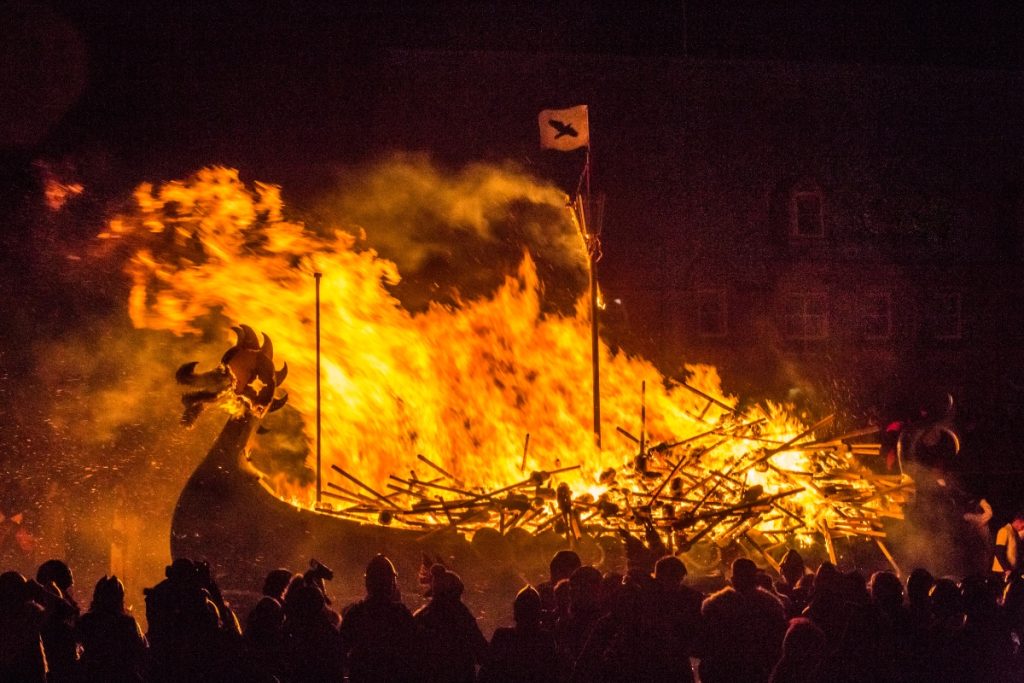
For those fortunate enough to visit in late January, Shetland hosts the renowned Up Helly Aa festival, a Viking-inspired celebration of fire that occurs rain or shine. Locals prepare tirelessly throughout the year for this torchlit procession, culminating in the dramatic burning of a replica Viking longship.
Shetland’s maritime history is as deep and diverse as its coastline. The islands have been a hub for fishermen, traders, and sailors navigating the treacherous North Sea for centuries. The lighthouses of Shetland have played an essential role in guiding ships through the unpredictable waters, ensuring safe passage and a warm welcome to those who sought refuge on these remote shores.
As the largest and most populous island in Shetland, Mainland offers a diverse landscape of cliffs, beaches, and archaeological sites. Lerwick, the bustling capital and heart of the island, features an excellent bookshop and, for fans of the TV series Shetland, the iconic shoreline house of Jimmy Perez at the Lodberries. A visit to the Shetland Museum is a must, where the former Bressay lighthouse optic is on display.
Sumburgh Head is the southernmost point of Mainland. Here, Sumburgh Head Lighthouse stands proudly on towering cliffs overlooking the North Atlantic Ocean. The visitor centre at Sumburgh Head offers visitors the chance to hear the historic foghorn (albeit recorded), enjoy a fantastic coffee shop stop with delicious cake, and perhaps catch sight of puffins or even passing orcas.

Driving north, Eshaness is renowned for its spectacular cliffs and stunning views. On the way, you will pass through Northmavine and the wonderfully-named Mavis Grind, where the island narrows to less than a mile wide, and it is said that a stone can be thrown from one sea to the other, though only the most skilled thrower would probably achieve this feat!
Eshaness Lighthouse, built in 1929, stands as a solitary guardian against the elements on the clifftop. Its presence starkly contrasts the rugged landscape, offering a sense of solace and safety amid nature’s fury.

Scalloway is the largest settlement on the west coast of Mainland. It is known for its picturesque harbour, Nordic influence, and notable connection to World War II.
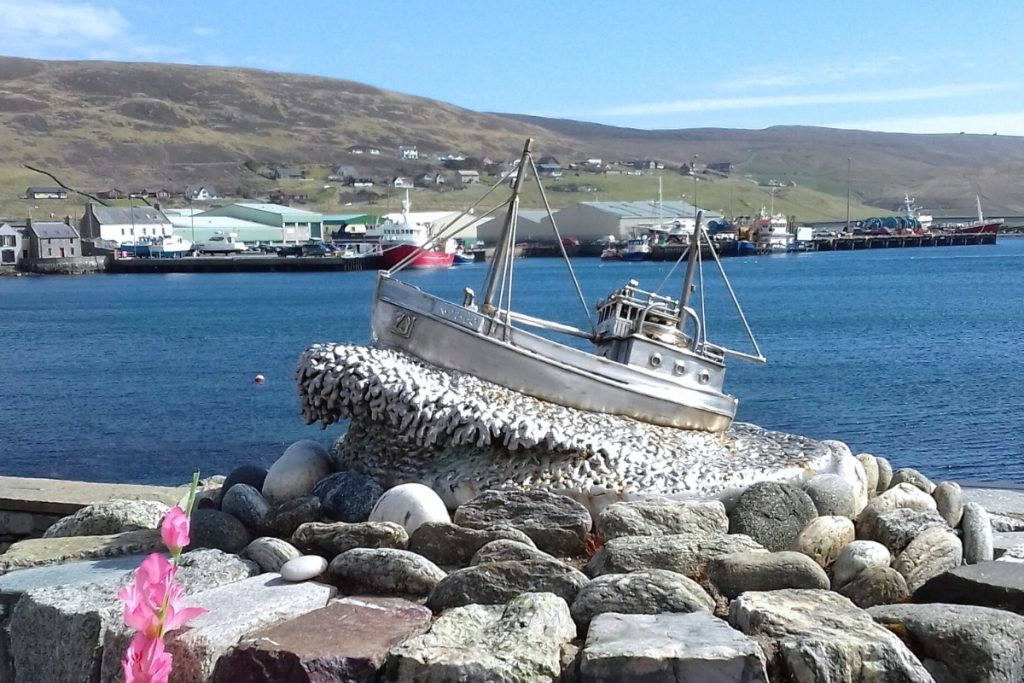
One of the most poignant chapters in Scalloway’s history is its role in the Shetland Bus operation during World War II. This clandestine operation involved using small fishing boats to transport agents, supplies, and refugees between Nazi-occupied Norway and Shetland. The Shetland Bus Memorial in Scalloway Harbour commemorates the bravery and sacrifice of those involved in these perilous missions. The Scalloway Museum offers an extensive exhibition on the Shetland Bus, providing an in-depth look at this extraordinary story of courage and resilience.
Scalloway also links with the Burra Isles, and at Hamnavoe, a pretty village and a picturesque walk to Fugla Ness Lighthouse.
Numerous walking trails crisscross the Mainland. One notable route leads to the Point of Fethaland, where you can see the modern Point of Fethaland Lighthouse and enjoy breathtaking views, including the historic ruins of old fishing stations.
Located north of the Mainland, Yell is the second-largest island in Shetland. It is a paradise for nature lovers, with vast moorlands, pristine beaches, and a diverse array of wildlife.
One of the island’s most striking features is the Sands of Breckon, a stunning white sandy beach on the west coast. The Old Haa Museum in Burravoe provides a glimpse into the island’s past, showcasing artefacts and exhibits on Yell’s maritime heritage, crofting history, and local wildlife.
Unst is the northernmost island in the Shetland archipelago and holds the title for the most northerly of almost everything in the UK – the most northerly supermarket, beach, tearoom, gin distillery (Shetland Reel is a favourite of mine!), bus shelter; you get the gist!

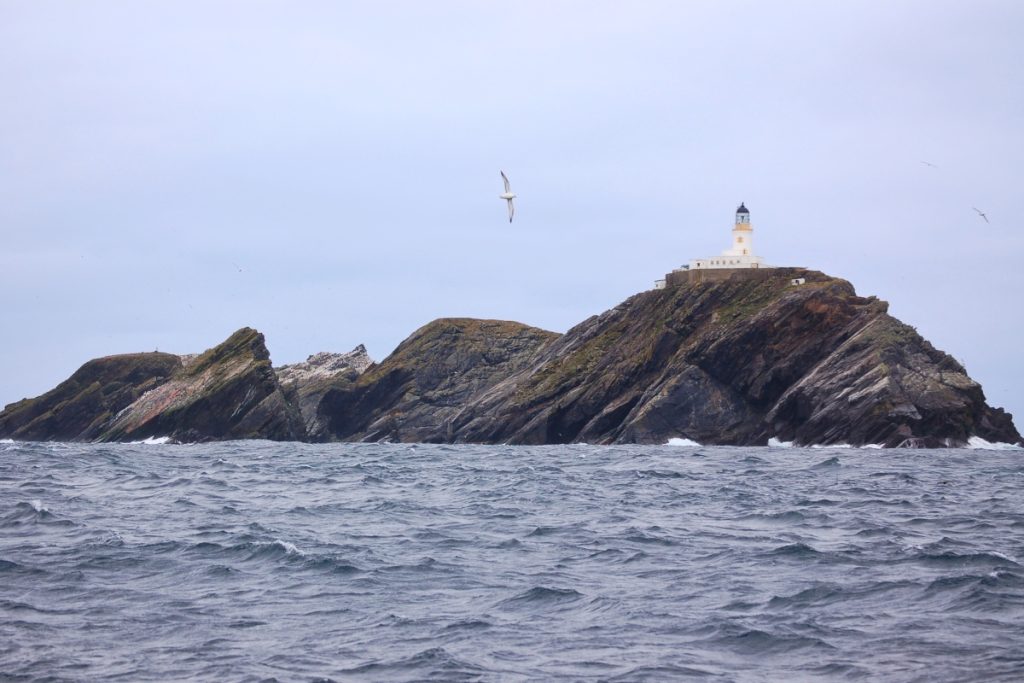
Perched on its tiny island, Muckle Flugga Lighthouse is the UK’s most northerly lighthouse, surrounded by the roaring North Sea. Beyond lies the lonely rock of Out Stack, which marks the UK’s most northerly outpost.
Close to Saxavord, the old RAF base and now UK Space Port, are stunning views out to Muckle Flugga. The walk across Hermaness is fantastic, starting near the former Muckle Flugga Shore Station at Burrafirth. Hermaness Nature Reserve is a haven for birdwatchers and nature enthusiasts. This trek can be quite challenging in places, but the breathtaking views are worth the effort.
The Unst Heritage Centre at Haroldswick is worth a visit, and there is an exhibition about Muckle Flugga Lighthouse.
Out Skerries, a small and remote group of islands within the Shetland archipelago, lies to the east of the Shetland Mainland. Access to Out Skerries is by ferry from the Shetland Mainland. The journey itself offers stunning views and a chance to experience island hopping.

Out Skerries comprises several islands and islets, with the main islands being Housay and Bruray, both connected by a bridge.
Out Skerries Lighthouse stands on the island of Bound Skerry and overlooks the island of Grunay, where the former keepers’ cottages are visible.
Whalsay, a thriving fishing community, is known for its picturesque harbours and scenic coast. Symbister, the island’s main harbour, is a focal point of Whalsay’s fishing industry. The bustling port provides a glimpse into the island’s seafaring life. Close to the ferry terminal is the tiny Pier House, which is now a museum describing how Shetland formed part of the Hanseatic League, with ships from Bremen and Lubeck sailing to trade with Shetland.
At the far north of the island, Whalsay Golf Club claims to be the most northerly golf course in the British Isles.

Several smaller modern lighthouses can be found on Whalsay at Suther Ness and Symbister Ness.
Situated just east of Lerwick, Bressay is renowned for its proximity to the Shetland capital. The island is easily accessible by a short ferry ride from Lerwick Harbour, making it a convenient and picturesque destination.

Bressay Lighthouse, built in 1858, is a striking landmark on the island. It guides vessels safely into Lerwick Harbour.
The most remote of Shetland’s inhabited islands, Foula is around 20 miles west of the Mainland. It is known for its dramatic cliffs and seabird colonies. Foula Lighthouse is a modern lighthouse established in 1986.
Fair Isle is nestled between Shetland and Orkney. It has two lighthouses, Fair Isle North and Fair Isle South Lighthouse.
Fair Isle is world-famous for its distinctive knitting patterns, characterised by intricate designs and harmonious use of colours. The island’s small community is also known for its warm hospitality and preservation of traditional folk music and dances.

Despite its remote location, getting to Fair Isle is possible through a few transportation options. Flights from Tingwall Airport take approximately 25 minutes and provide stunning aerial views of the Shetland Islands. Flights are limited and subject to weather conditions, so it’s advisable to book in advance and check for any schedule changes due to weather.
The Good Shepherd IV ferry operates between Grutness on the Shetland Mainland and Fair Isle. The journey takes 2.5 to 3 hours and offers scenic views of the surrounding islands and sea. Checking the ferry schedule in advance is essential, as sailings are limited and weather-dependent.
Fair Isle’s weather can be unpredictable, especially with fog that may cause flight and ferry service delays or cancellations. It’s wise to plan for extra time in your itinerary and remain flexible with travel plans.
Check out a selection of accommodation available.
Please use my affiliate links when making a booking – thank you!
Discover more lighthouses and places to visit in Shetland