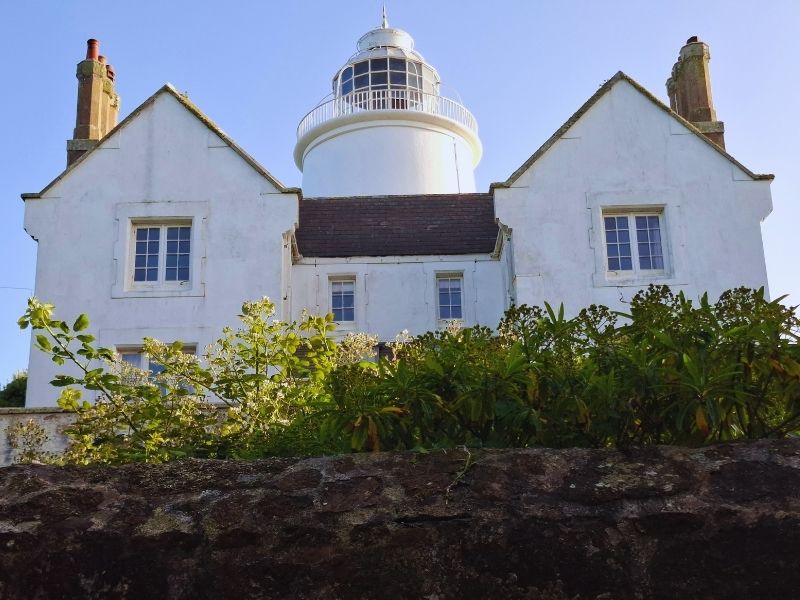
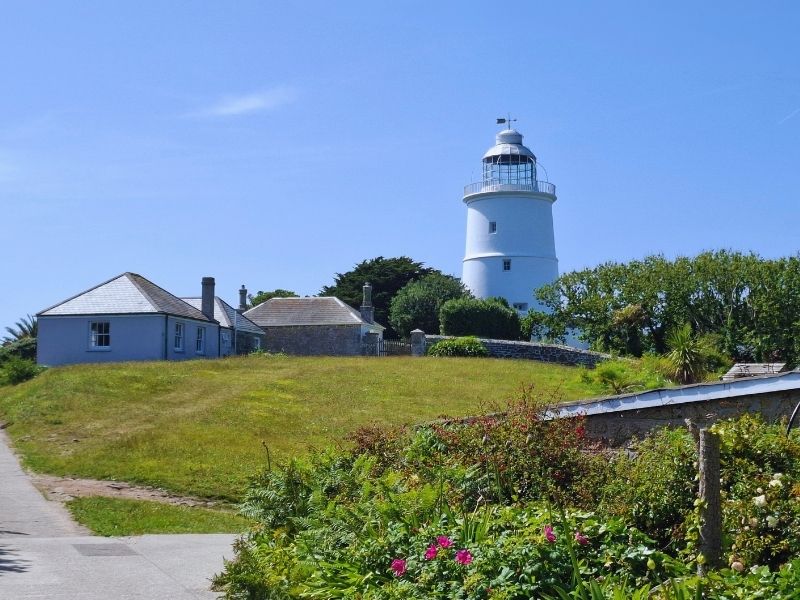
The original St Agnes Lighthouse was built in 1680 and stands on the island’s highest point.
Sir John Clayton applied for a patent to erect a lighthouse on one of the Scilly islands, but Trinity House rejected his application. Shortly afterwards, Trinity House put forward its own plan for a lighthouse. They chose St Agnes, the most southwesterly of the inhabited islands.
Captain Simon Bayly and Captain Hugh Till were tasked with building the lighthouse. The local inhabitants opposed them, however, refusing to sell land and preferring to profit from the ships wrecked on the island.
St Agnes Lighthouse was finally built in 1680 and stood at just over 70 feet high on the highest part of the island. It was first lit on 30th October 1680 and, at the time, was the only operational lighthouse in the southwest of England.
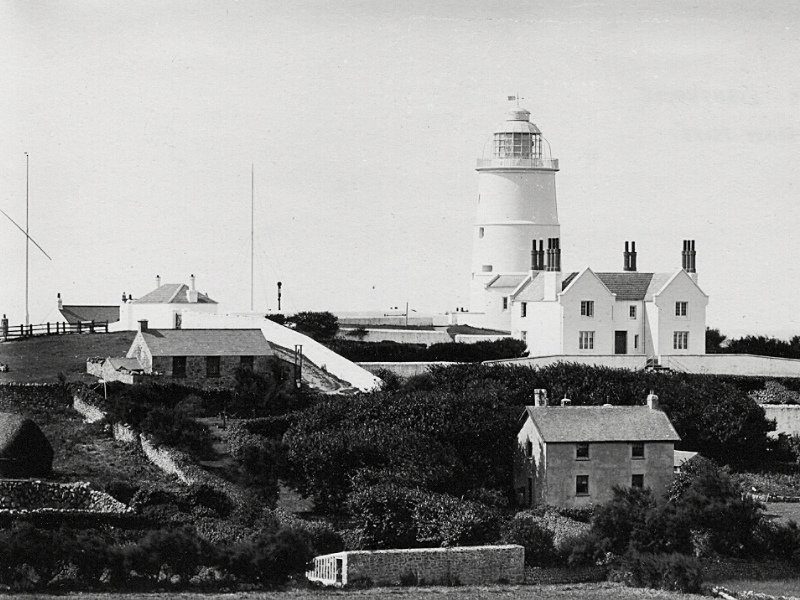
Four gun ports were installed on the tower’s first floor, designed to defend against privateers if necessary.
The lantern was over 25 feet high and lit using an enclosed coal brazier, which was unusual for coal-fired lights, which are normally open. The lantern had as many as twelve chimneys to draw smoke away.
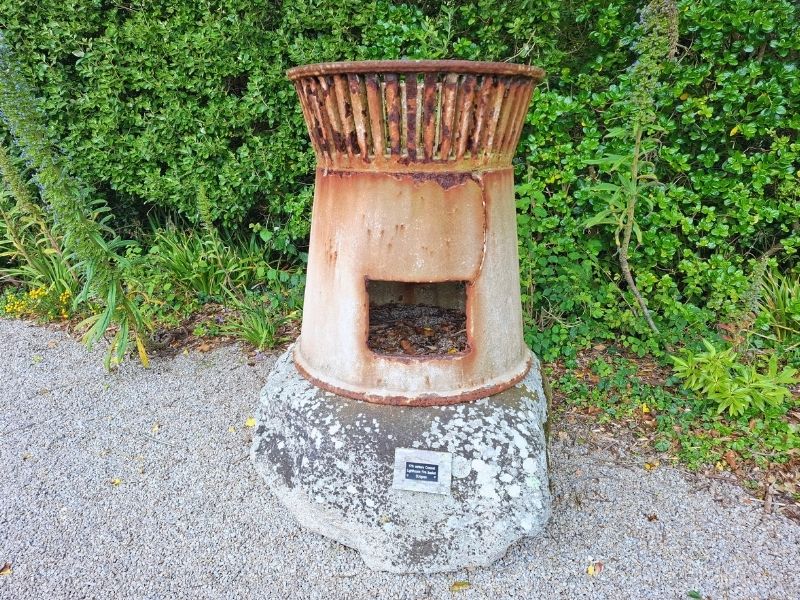
Coal was delivered once a year and stored at the base of the tower, and over one hundred tons were used annually. The coal was hoisted up to the lantern when required. The former original coal cresset used at the lighthouse is now on display at the Abbey Garden in Tresco. The circular cast iron brazier is 43 inches high and about three feet wide.
The first lighthouse keeper at St Agnes came from outside the islands, as there was a history of wrecking from locals. However, before the end of the first operational year, he was charged with wrecking! He had let the fire burn deliberately low so a vessel would miss the light. When the ship hit the rocks, he revived the brazier and was found plundering the wreckage. Much of his haul was found hidden in the coal at the base of the lighthouse.
Another vessel was carrying coal for the lighthouse when it ran aground on Burnt Island in 1764.
Trinity House received complaints about the effectiveness of the lighthouse. So in 1790 Argand oil burners with recently developed parabolic reflectors were installed. St Agnes became the first revolving light in Britain. The lamp assembly was mounted on a triangular frame with seven lamps on each face. A weight mechanism turned the apparatus once every minute, giving one flash every 20 seconds.
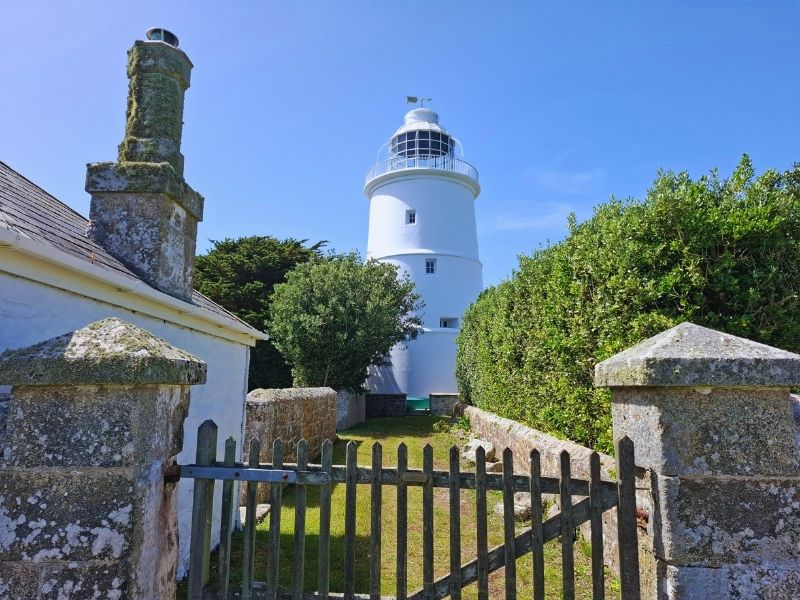
In 1806 Samuel Wyatt made further improvements when he designed and fitted a new lantern, the same lantern that exists today. At the same time, the number of lamps was increased to ten on each face, and the revolution slowed to give one flash every 30 seconds.

Plans were also proposed to install a fog signal at St Agnes, but this did not materialise.
Despite these improvements, wrecks continued, and there were calls for a new lighthouse to be built on one of the exposed western rocks. In January 1843, the schooner Douro struck the Crebawethan rocks, losing all on board.
James Walker was despatched to seek a suitable site, and Bishop Rock was chosen. Work began on the new Bishop Rock Lighthouse. As a result, Trinity House announced that St Agnes Lighthouse would be discontinued upon its completion. However, work on the Bishop took longer than anticipated, and St Agnes was given a reprieve. Instead, in 1858, its range increased to 18 miles, warning vessels entering the island of St Mary’s.
By the 1880s, Bishop Rock Lighthouse had to be strengthened and raised. A new lighthouse was built on Round Island at north of the archipelago, and in 1911 Peninnis Lighthouse was established. The latter brought to an end the use of St Agnes Lighthouse. As Peninnis Lighthouse was exhibited for the first time, St Agnes was discontinued. This brought to an end 230 years of uninterrupted service.

The lighthouse and adjoining keepers’ cottages were sold privately after its decommissioning. The lighthouse is still regularly painted and used as a daymark. There is no access to the tower or cottages.
The nearby Turks Head pub has some lighthouse-related photos inside.
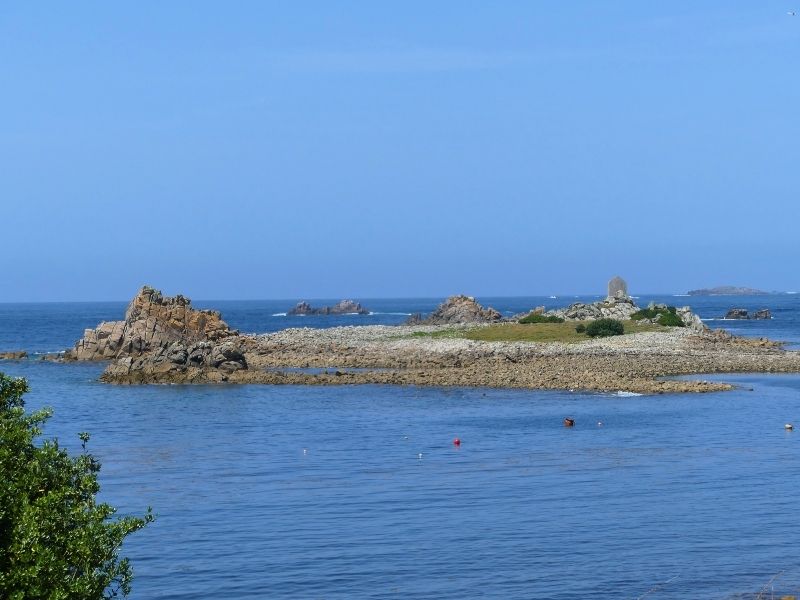
To the northwest of the island is Burnt Island near St Agnes Church. The island is only accessible at water, and at the seaward end is the Tins Walbert Daymark.
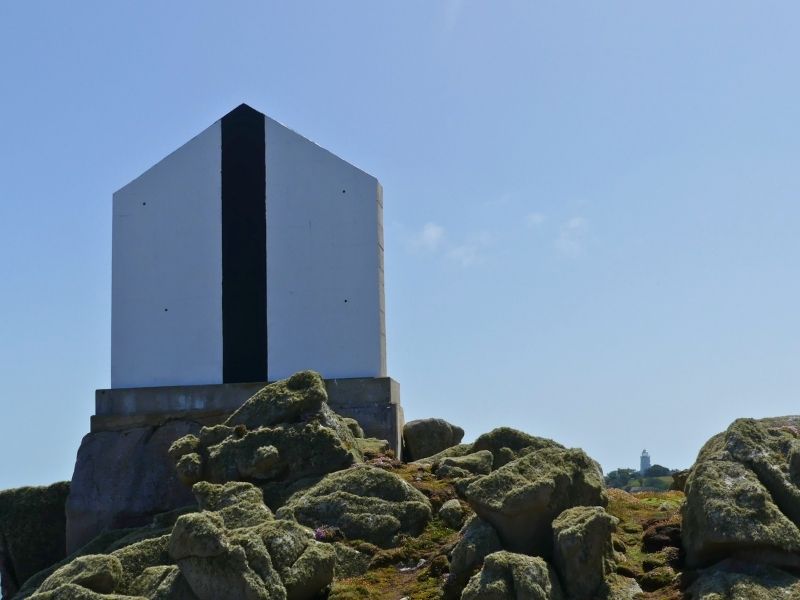
The daymark has a large vertical stripe on its seaward-facing side and aligns with St Agnes Lighthouse to form a transit marking the North West Passage through the Scilly waters.

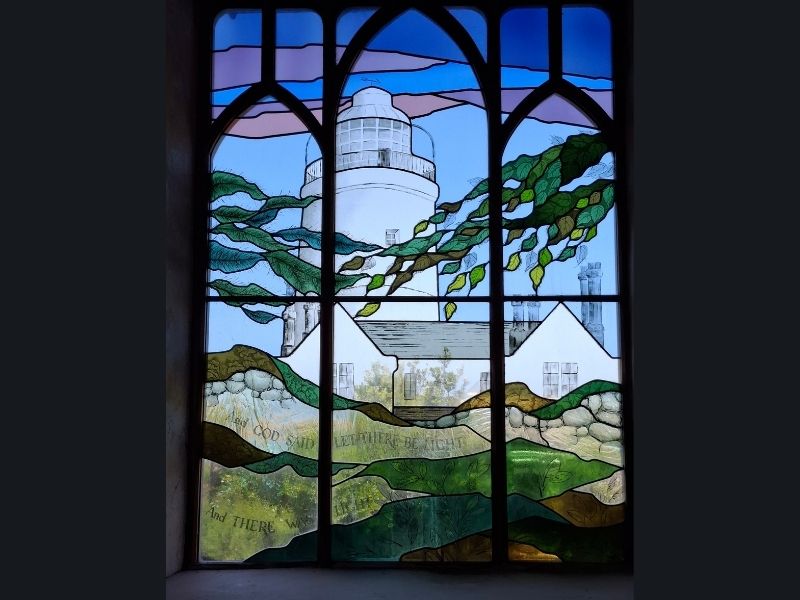
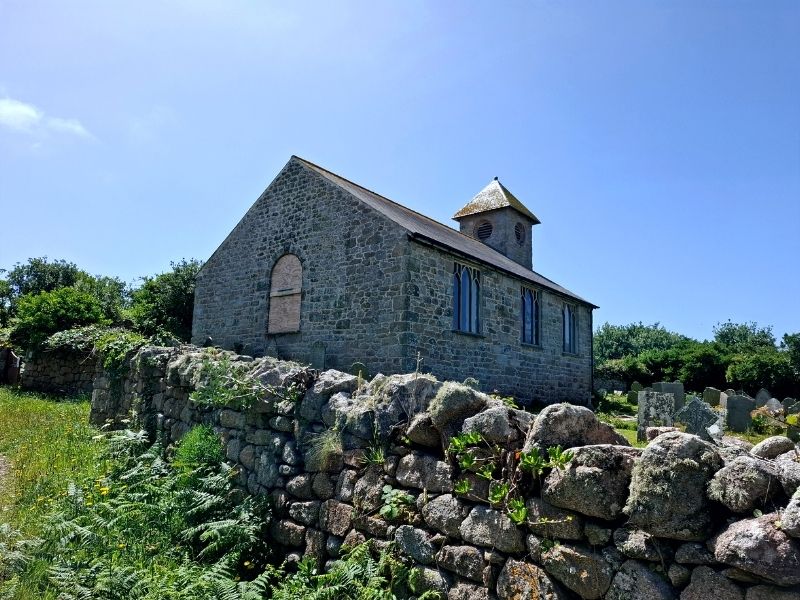
Alongside the bay by Burnt Island is St Agnes Church, which has a stained glass window depicting St Agnes Lighthouse.
The beautiful stained glass window was designed by Oriel Hicks.