

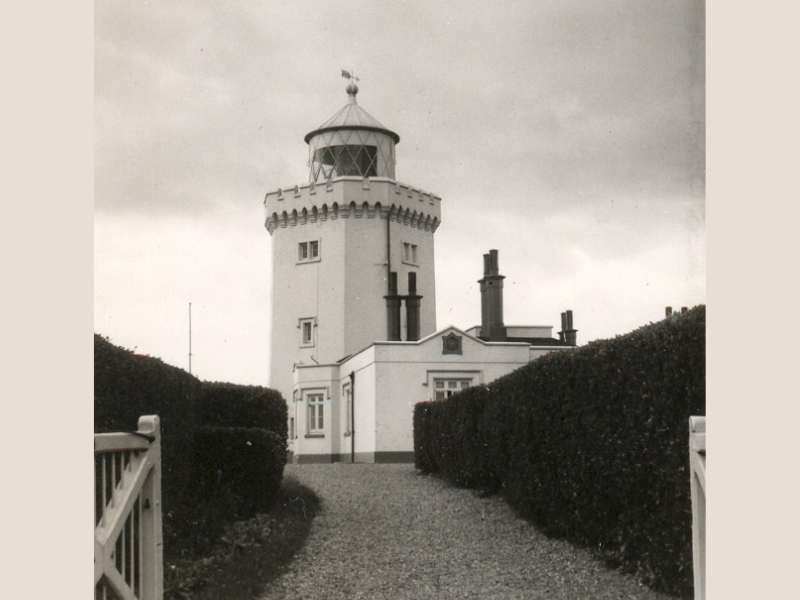
South Foreland Lighthouse is located on the edge of the cliff overlooking Dover Harbour.
The famous white cliffs of Dover tower 328ft above sea level at South Foreland. Out in the English Channel, great stretches of treacherous sand banks lie in wait for vessels making their crossing. One of the most notorious of these is the Goodwin Sands, known as The Great Ship Swallower, which stretches 10 miles long and three miles wide. In 1836, up to thirty vessels were lost on these sands amidst a huge storm.
This post may contain affiliate links. You can read my affiliate policy here.
The earliest record of a light at South Foreland dates from 1367. A hermit, Nicholas de Leg, kept a light burning in a cave below the cliffs at Dover.
The earliest record of a request for a permanent lighthouse dates to 1634. Charles I granted Sir John Meldrum permission to erect two lighthouses at South Foreland with a lease for 50 years at £20 per year. The two lights originally had open fires. By 1719, the lanterns were enclosed. The lanterns were replaced in 1793, housing up to fourteen reflectors with oil lamps.
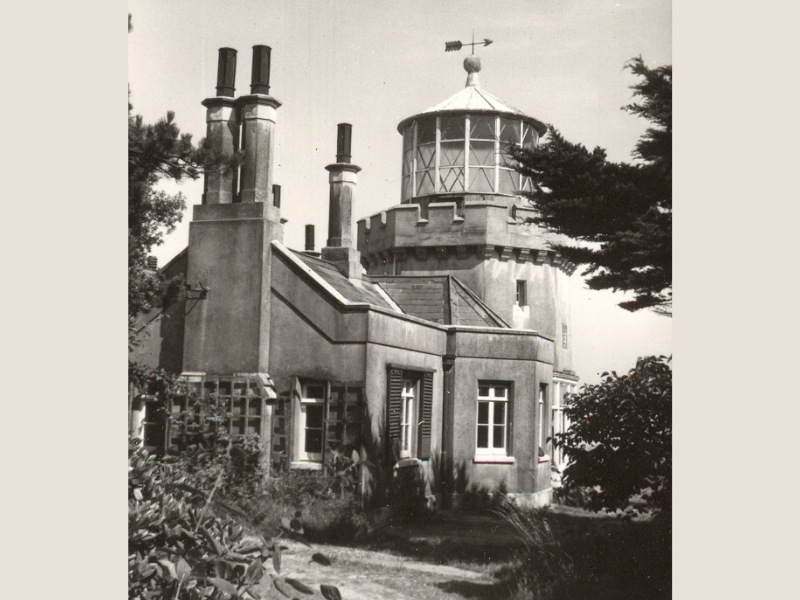
In 1832, the government authorised the purchase of the South Foreland Lighthouses. The higher lighthouse was rebuilt by Trinity House Chief Engineer James Walker in 1843. This is the 69ft high tower which stands today, with its castellated parapet and dwellings adjoining the building.
The Low Light was rebuilt in 1846, three years later. An octagonal white tower 49ft in height, it was very similar in design to that of the higher light. Further land was acquired in 1869 between the two lights. This made space for engine houses, workshops and living accommodation for the three keepers.

Between 1856 and 1885 a number of lighting experiments were carried out at South Foreland Lighthouse. In December 1858 a magneto-electric light was tested at the lighthouse by Professor Holmes. It was the strongest artificial light known at that time.
In 1872, the South Foreland Lighthouse was the first to be lit with a permanent electricity source, producing 150,000 candlepower. However, Holmes’ machine was short-lived, as a new dynamo-electric system was tested in 1876-7 by Dr Siemens. This proved a far superior illuminant to the magneto-electric machine.
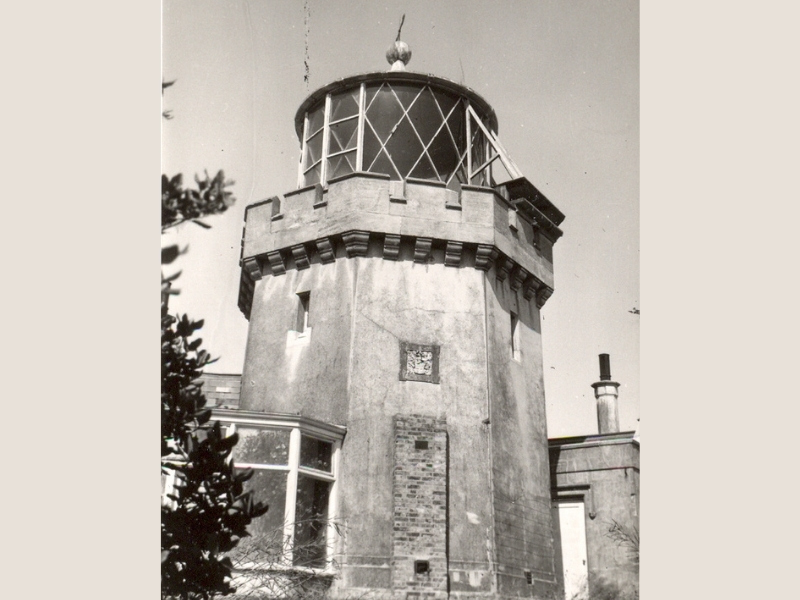
Other experiments were carried out at the lighthouse between 1884 and 1885. These included testing out gas illumination in preference to electricity. Three temporary lights were established on the headland to record these tests. Further experiments were also carried out with fog signals.
1898 marked another milestone in South Foreland’s history. Guglielmo Marconi made his first ship-to-shore radio broadcast on 24th December from the lighthouse to the East Goodwin Lightvessel, 10 miles away. The following spring, the lightship was the first vessel to send its own distress signal. The crew were able to summon help when it was run down by the RF Matthews.
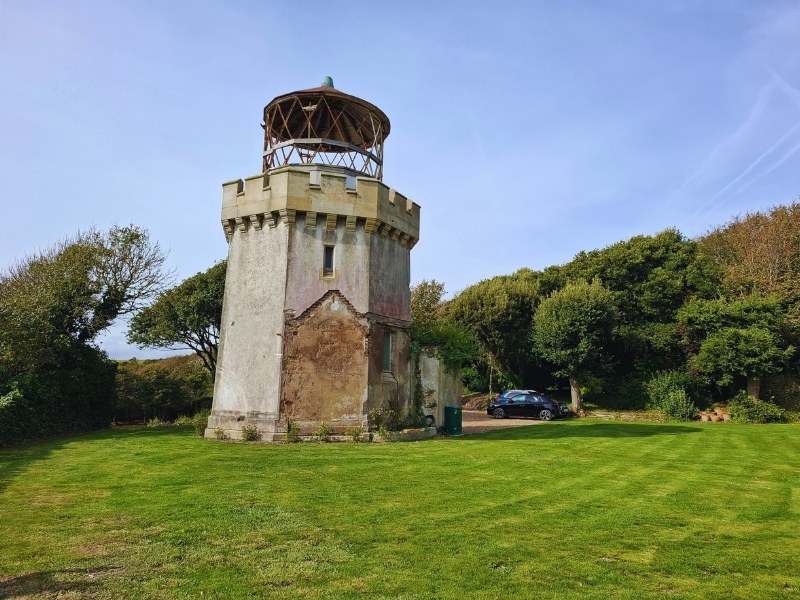
The Low Light was decommissioned in 1904 due to the realignment of the Goodwin Sands. The cottages adjoining the tower were later demolished.
The shorter lighthouse, on private grounds and visible from South Foreland Lighthouse, is not accessible to the public.
South Foreland Lighthouse was automated in 1959. It was modernised in 1969 when it was finally connected to the national grid, with a generator as a standby power source.

Following a review of navigation aids, the lighthouse was discontinued on 30th September 1988. The National Trust acquired the lighthouse and grounds the following year.
South Foreland Lighthouse is now open as a visitor centre and cafe.
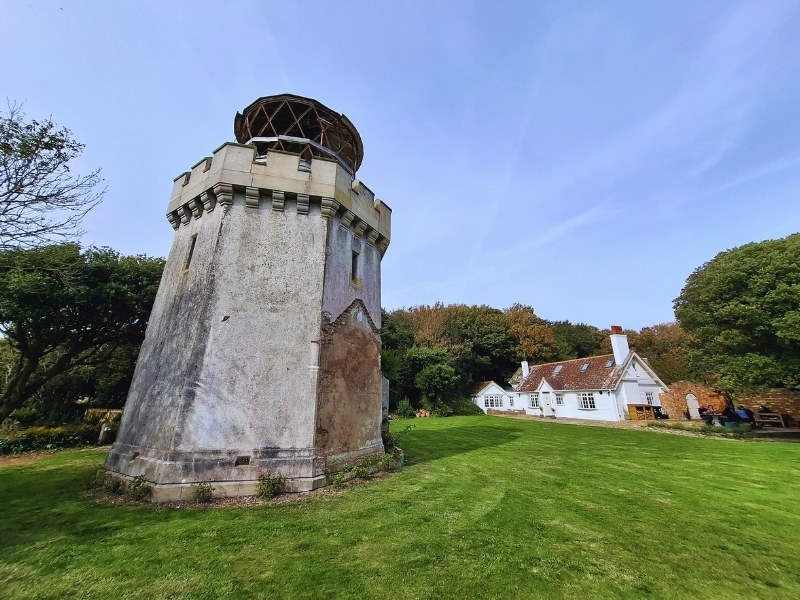
The Low Lighthouse was featured in the 1967 horror movie The Shuttered Room, starring Oliver Reed, and the cottage next to the Low Light grounds is available to stay in.


